Pipe mixers are available in stainless steel, polyvinyl chloride (PVC), polypropylene (PP), and carbon steel, in both stationary and mobile versions. They feature heating and cooling jackets, injectors, sampling points, and precision measuring instruments, and are suitable for all industries. Sizes range from 10 to 300 cm³ .
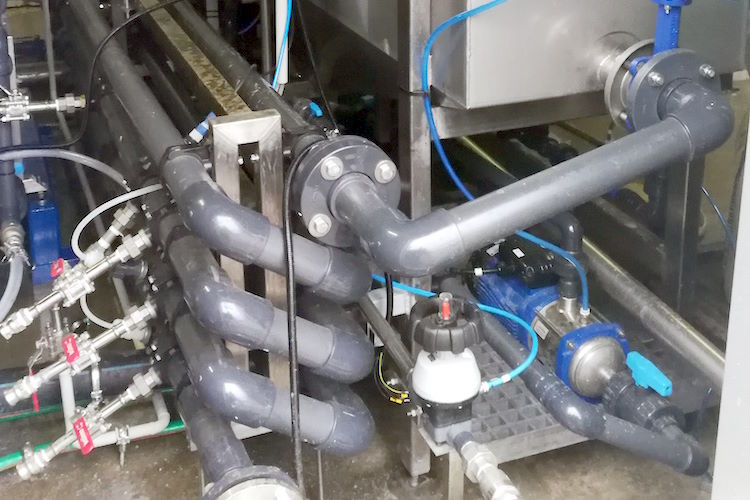
Where are stationary pipe mixers used?
Rapid flocculation using a stationary mixer is one of the fastest wastewater treatment methods. Due to its ability to achieve flocculation in a very small space, this method is gaining increasing importance in Iranian industry .
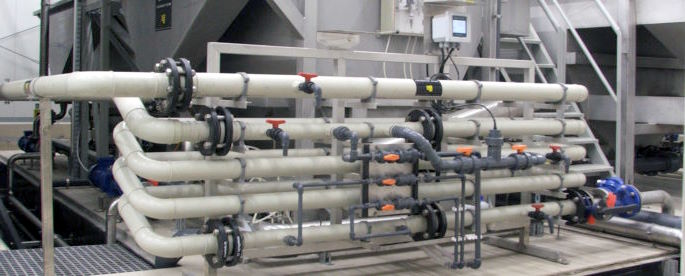
What are stationary pipe mixers?
Stationary pipe mixers are devices used to mix liquids or gases in pipelines without moving parts . These mixers consist of stationary elements inside the pipe that create turbulence, thus mixing the liquids.
How does that work?
Stationary pipe mixers consist of a series of precisely engineered mixing elements that divide the liquid flow into smaller fractions and then recombine them . This results in a homogeneous and efficient mixture.
Characteristics
- They have no moving parts , which means these mixers require less maintenance.
- Low pressure loss : The special design of these mixers reduces pressure loss in the system.
- Homogeneous mixture: Internal components ensure a homogeneous mixture of the liquids.
- Easy installation : Thanks to their simple design, these mixers are very easy to install.
Applications
Stationary pipe mixers are used in many industries, including petrochemicals, water and wastewater treatment, food processing, and pharmaceuticals. These mixers are ideally suited for mixing liquids and gases, as well as gas-liquid mixtures.