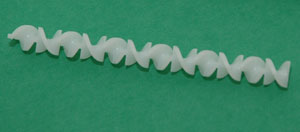
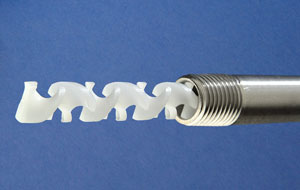
Adhesives and foams are the most difficult to mix in a static mixer. Not for mixing accuracy, but for drying in the static mixer . To solve this problem, it is recommended to use disposable plastic mixing elements.
Introduction
Plastic compounding is a vital process in the production of plastic products used in various industries including automotive, packaging, electronics and medical. This process helps in combining different plastic materials and additives to improve the mechanical, thermal and chemical properties of the products. In this article, we have reviewed the elements of plastic compounding, their types, properties and applications.
Definition of plastic mixing elements
What are plastic mixing elements?
Plastic mixing elements refer to a set of materials and equipment used in the mixing process of plastics and additives. These elements include various types of plastics, additives, and mixing equipment that help improve the mechanical, thermal, and chemical properties of the final products.
Types of plastics in plastic mixing
1. Thermoplastic Polymers
Thermoplastic polymers are plastics that become soft and meltable at high temperatures and harden again at low temperatures. These polymers are widely used in plastic compounding processes due to their recyclability and high ductility.
Types of thermoplastic polymers
- Polyethylene (PE) : One of the most widely used thermoplastic polymers, it is used in many plastic products due to its suitable mechanical and chemical properties.
- Polypropylene (PP) : Polypropylene is also one of the most widely used thermoplastic polymers, which is used in many industries due to its high resistance to heat and chemicals.
- Polyethylene terephthalate (PET) : This polymer is widely used in the production of plastic bottles and food packaging due to its mechanical properties and high transparency.
2. Thermosetting Polymers
Thermoset polymers are plastics that, after being cured and heated, become permanently hardened and cannot be remelted. These polymers are used in certain applications due to their superior mechanical and thermal properties.
Types of thermosetting polymers
- Epoxy resins : These polymers are widely used in the production of adhesives, coatings, and composites due to their high mechanical and chemical properties.
- Polyurethanes (PU) : Polyurethanes are used in the production of shoes, coatings, and thermal insulation due to their flexible properties and high abrasion resistance.
- Phenolic resins : These polymers are widely used in the production of electrical and thermal products due to their high resistance to heat and chemicals.
Plastic additives in plastic mixing
1. Plasticizers
Plasticizers are substances added to plastics to increase their flexibility and ductility . These additives help reduce the softening temperature of plastics and improve the mechanical properties of the final products.
2. Fillers
Fillers are substances added to plastics to improve their mechanical, thermal, and chemical properties. These can include minerals, glass fibers, calcium carbonate, and talc.
3. Stabilizers
Stabilizers are substances added to plastics to increase their resistance to oxidation, heat, and light. These additives help improve the longevity and performance of plastic products.
4. Antioxidants
Antioxidants are substances added to plastics to prevent oxidation and thermal decomposition. These additives help maintain the mechanical and thermal properties of plastics.
5. Colorants
Colorants are substances added to plastics to change the color and appearance of the final products. These substances can include organic and inorganic dyes.
Plastic mixing equipment
1. Extruders
Extruders are an important piece of equipment in the plastic compounding process, used to melt and mix plastics and additives. These devices consist of a rotating screw that pushes the plastic material forward through a heated chamber.
2. Internal Mixers
Internal mixers consist of two rotating screws that simultaneously mix plastic materials and additives. These devices are widely used in plastic mixing processes due to their high efficiency in mixing materials.
3. Blenders
Blenders are devices used to mix plastic materials and additives. These devices consist of a rotating chamber that mixes the materials homogeneously.
4. Mills
Mills are devices used to crush and pulverize plastic materials. These devices help improve the mixing process and increase the contact surface of the materials.
Plastic mixing applications
1. Automotive industries
In the automotive industry, plastic compounding is used to produce interior and exterior parts of vehicles, including dashboards, door panels, bumpers, and trim pieces. This process helps improve the mechanical and thermal properties of the vehicle parts and increase their durability and useful life.
2. Packaging industries
In the packaging industry, plastic compounding is used to produce films, bottles, bags, and flexible packaging. This process helps improve the mechanical, chemical, and thermal properties of the packaging material and increase the shelf life of the packaged products.
3. Electronics industries
In the electronics industry, plastic compounding is used to produce electronic components, including housings, connectors, and cables. This process helps improve the insulating and mechanical properties of electronic components, increasing their safety and lifespan.
4. Medical industries
In the medical industry, plastic compounding is used to produce medical devices such as syringes, catheters, tubes, and housings. This process helps improve the mechanical, chemical, and thermal properties of medical devices and increase their safety and performance.
5. Construction industries
In the construction industry, plastic compounding is used to produce construction materials such as pipes, profiles, insulation , and coatings. This process helps improve the mechanical and thermal properties of construction materials and increase their durability and useful life.