Stationary mixers are used in many areas of water treatment, including:
- Condensation in raw water tanks
- pH adjustment
- Fast mixing in water treatment tanks
He represents
One of the most important steps in water treatment is the addition of chemicals to the water stream . In coagulation and flocculation processes, for example, chemicals such as alum or polymers must be evenly distributed throughout the water stream to effectively remove suspended particles and contaminants.
Previously, this was achieved primarily through the use of mechanical mixers , which required significant energy consumption, constant maintenance, and high costs. Today, the use of stationary mixers in water supply and wastewater treatment plants is considered the optimal solution due to their high efficiency and simple design.
What is a food processor?
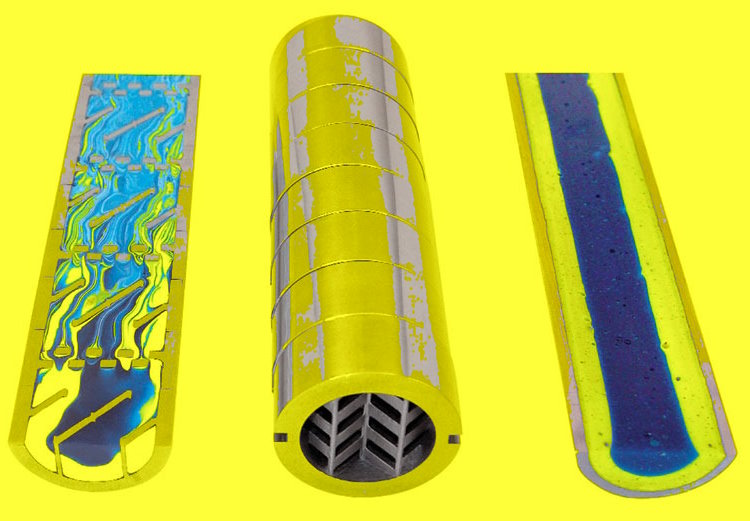
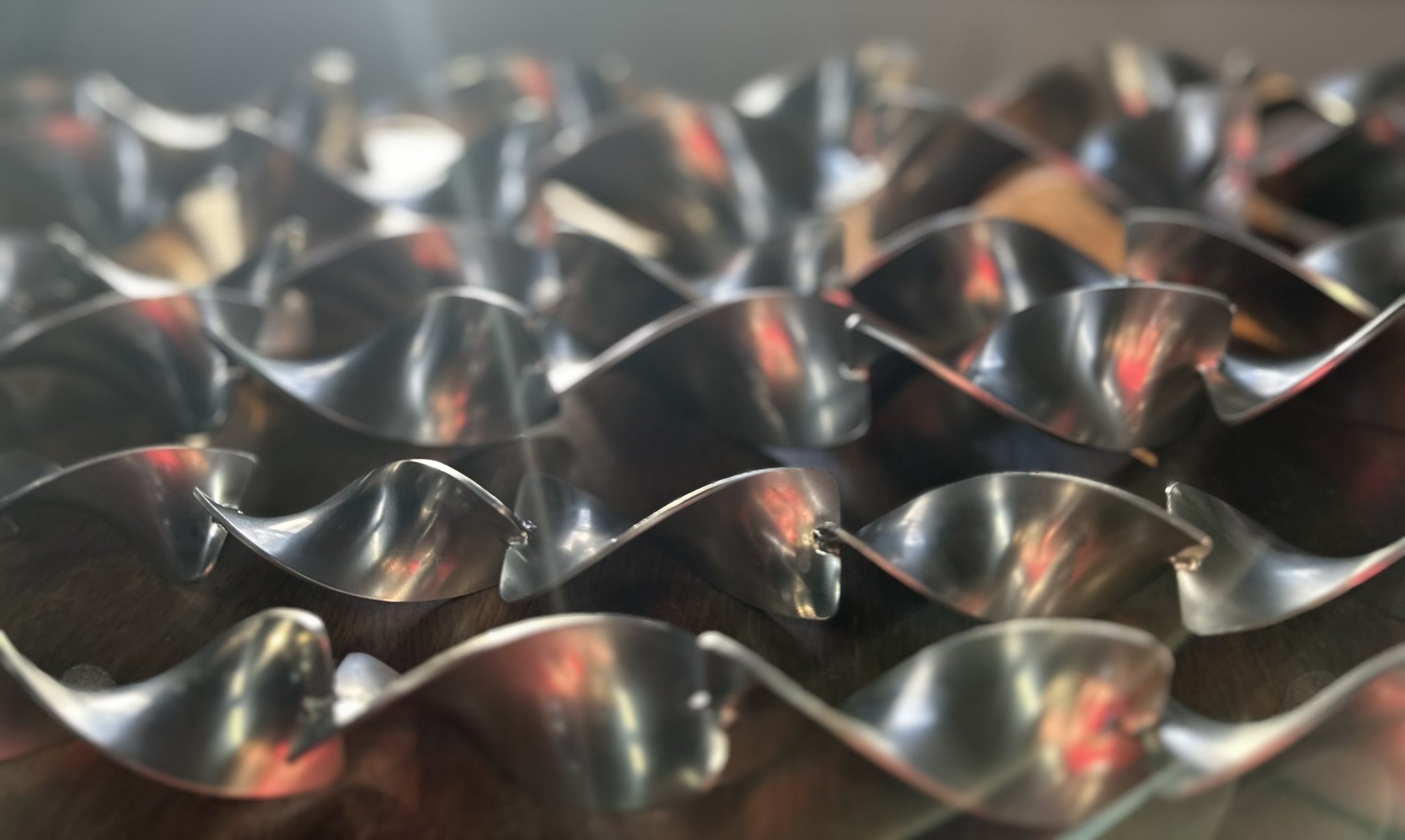
A static mixer is a simple device with no moving parts that is installed in a water-carrying pipe or channel. It consists of a series of geometric elements (such as spiral plates or special blades) that disrupt the water flow in a controlled manner, thus ensuring even mixing of the chemicals with the water.
Unlike mechanical mixers, which require a motor and electricity, a stand mixer uses only the energy of the flow to produce the mixture, which is why it is also called a stand mixer.
Why is it important to use fixed faucets for water purification?
Stationary mixers play a crucial role in water treatment, especially in reagent injection. Their importance is demonstrated primarily in the following aspects:
-
Even distribution of chemicals:
For coagulants, disinfectants or pH regulators to work optimally, they must be distributed throughout the water stream as quickly as possible. -
Low static energy consumption
: The motor consumes neither motor nor mechanical energy and only slightly reduces water pressure during operation. -
Simple design and maintenance:
Since the device has no moving parts, maintenance is very easy and cost-effective. -
High efficiency with variable flow
: Fixed mixers maintain the correct mixing performance even when the water flow changes.
Main applications of stationary mixers in water treatment
1. Injection of the blood coagulation system
During the coagulation process, materials such as aluminum sulfate (alum) or ferric chloride are added to the water column to destabilize small colloidal particles. Stationary mixers ensure complete mixing of these materials with the water immediately after addition, thus ensuring a uniform initiation of the chemical reaction throughout the flow.
2. The coagulated material is distributed evenly.
Organic and inorganic polymers can be used to form larger aggregates. The use of a static mixer allows for thorough mixing of the polymer with water without altering its molecular structure, improving sedimentation and filtration.
3. Introduction of pH regulators
Many water treatment plants use chemicals such as caustic soda or acids to regulate pH. Stationary mixers ensure the even distribution of these chemicals and maintain the water’s pH within a specific range.
4. Disinfect water with chlorine or other disinfectants.
During the disinfection phase, chlorine or other oxidizing agents must be distributed throughout the water stream to kill all microorganisms. Stationary mixers create vortex currents to ensure rapid and complete spraying of the disinfectant.
5. Injecting chemicals to control deposits and corrosion.
In industrial water supply systems or water pipes, limescale protection agents or corrosion inhibitors are often added to the water. The effectiveness of these agents can be improved by using a static mixer.
Advantages of using stationary taps for water treatment
-
No external power source required → Reduced operating costs.
-
Simple construction and long service life → Suitable for continuous use.
-
Easy installation → Can be installed over existing pipes.
-
No constant operator required → Easier to use than a mechanical mixer.
-
It can be used over a wide flow and pressure range .
-
A high mixing quality is achieved even over short periods of time .
A stationary mixer tap from Samoon Engineering
Limitations and problems
Despite the many advantages of stand mixers, their use also comes with some limitations:
-
This results in a reduction in fluid pressure (although usually only slightly).
-
Regulating the mixing intensity during operation is not possible (unlike mechanical motors).
-
The flow rate and viscosity of the fluid must be carefully considered during design.
Design and selection of suitable fixed mixers
Selecting the right stationary agitators for wastewater treatment plants is crucial. Some design criteria include:
-
Pipe diameter and length : Depends on water consumption and installation location.
-
Materials for main body and components : Stainless steel, PVC or fiberglass are usually chosen due to their corrosion resistance.
-
Shape of the internal elements : depends on the type of mixture (spiral, cross or composite mixture).
-
Low pressure and permissible flow : avoid energy losses.
Comparison of stationary and mechanical mixers
| Special feature | Stand mixer | mechanical engine |
|---|---|---|
| moving parts | NO | Yes |
| External power supply required | NO | Yes |
| Maintenance costs | too low | higher |
| Control the mixing intensity | limited | Adjustable |
| Life | higher | half |
| suitable | Inject chemicals quickly and evenly. | Processes that require precise control of the mixing speed |
Examples of industrial applications of stationary mixers in water treatment
-
Municipal sewage treatment plants : for the even distribution of flocculants and chlorine.
-
Food industry : for pH regulation and disinfection of process water.
-
Power plants and petrochemical industry : to introduce chemicals to combat corrosion.
-
Industrial wastewater treatment : Used to mix chemicals prior to chemical and biological processes.
Finally
Stationary mixers are among the best devices for introducing and mixing chemicals in water treatment processes due to their simple design, low cost, long service life, and high efficiency . The use of these devices improves treatment efficiency, reduces chemical consumption, and saves energy.
Given the growing challenges in providing safe and affordable water, the use of sustainable and affordable technologies such as fixed faucets is an important step towards sustainability and improved water treatment systems.