The process of industrial blending plays a vital role in the petroleum industry. From initial exploration to the commercialization of the final product, industrial blending technologies are used by oil companies for a wide variety of processes. In this article, we explain some of the roles industrial blending plays in bringing petroleum products to market and how oil companies can benefit from this technology. Let’s explore the advantages of industrial blending.
Industrial mixing process in mining facilities
Drilling fluid is used in oil production to keep the drill bit clean and prevent overheating. This drilling fluid is a stabilized mixture of water, oil, and clay. The mixture consists of a mixture of water and oil in a highly agitated tank and is applied with a single hand movement. By providing this fluid, industrial mixing technology plays a vital role in drilling. It contains oil.
Blending also plays a key role in product sampling. Crude oil is sampled before transportation to the refinery. However, to measure water content as accurately as possible, the water must be evenly distributed throughout the oil in the pipeline. For this purpose, an agitator is installed upstream of the process. Importantly, pre-mixing agitates the oil so that it blends with the water, creating a mixture that can be easily separated during filling into downstream storage tanks. Since a sampling error of just 0.1% can cost a refinery $250,000 per average container of oil, the use of blending technologies to ensure accurate water content sampling in fats is a must for all refineries.
Another function of industrial blending in production is to reduce the viscosity of viscous crude oil so that it can be transported through existing pipelines designed for lower-viscosity crude oil. Finally, blending technologies are also used for oil separation in dry oil sands production.
Subsequent operations and industrial mixing process
If this sludge settles at the bottom of the tank, it hardens and becomes difficult to pump. Therefore, it is important to constantly stir the crude oil throughout its storage period. To prevent this, most refineries use impeller agitators . These have a side inlet and rotating submersible jet nozzles. Butterfly agitators prevent further settling of the sludge. If sludge settles at the bottom of the tank, high-pressure jet nozzles that constantly rotate at the bottom of the tank can loosen it.
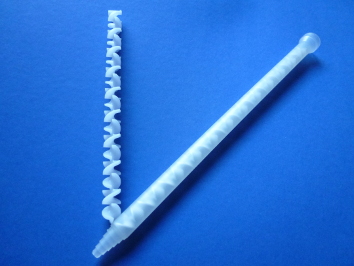
When processing natural gas, high concentrations of CO2 and SO2 must be removed. In a typical refinery, this is done through a process that absorbs CO2 and SO2 in a closed contactor. However, these contactors are bulky and unsuitable for use in offshore refineries. Instead, static offshore mixers are used to separate and remove CO2 and SO2 from the natural gas.
Mixing technology is also used to remove salt from oil before further refining. The oil is mixed with an emulsifier while still in the pipeline and then blended with fresh water in an inline mixer. The water-oil mixture is then separated in an electrostatic separator to produce oil that is virtually water- and salt-free.
During propane production, asphaltenes and other resins must be removed from the propane. To do this, the propane is mixed in a static mixer before being fed into the extraction machine. This mixing allows the propane to be deasphalted using a significantly smaller extractor than would otherwise be required.
Finally, most petroleum products must be mixed with certain additives before they can be prepared for sale. For this purpose, agitators or mixers are placed in the tank along with the necessary additives.
The right mixing applications can make the difference
Industrial blending processes play a crucial role in the petroleum industry, both in the upstream and downstream phases. They often not only improve the efficiency and effectiveness of operations but can also lead to significant savings for refineries. From mixing drilling fluids to lubricate wells during oil production to blending additives in the final product, industrial blending technologies are used in virtually every production phase of petroleum products.
Mixer Direct offers a wide range of high-quality industrial mixers for the oil industry. If you’d like to learn more about our mixers and their applications in the oil industry, contact us today using the button below.