In the oil, gas, and petrochemical industries, flaring of excess gas is a common method for cleaning emissions. While once considered an unavoidable technical and safety measure, indiscriminate flaring is now unacceptable due to growing environmental concerns and stricter international regulations.
Flaring associated petroleum gas not only pollutes the air and leads to greenhouse gas emissions such as carbon dioxide and methane, but also results in the loss of valuable energy resources. Therefore, capturing and reusing associated petroleum gas as a feedstock or fuel is a top priority for the global oil and gas industry.
What is flare gas?
Flare gas is a mixture of light hydrocarbons (such as methane, ethane, and propane) with impurities such as hydrogen sulfide (H₂S), carbon dioxide (CO₂), and nitrogen. It is a byproduct of various oil and gas refining and production processes.
The primary purpose of gas flaring is to control overpressure within the facility and improve safety. However, various technologies have been developed to capture and utilize flare gases, allowing this energy to be converted into economic value instead of being burned.
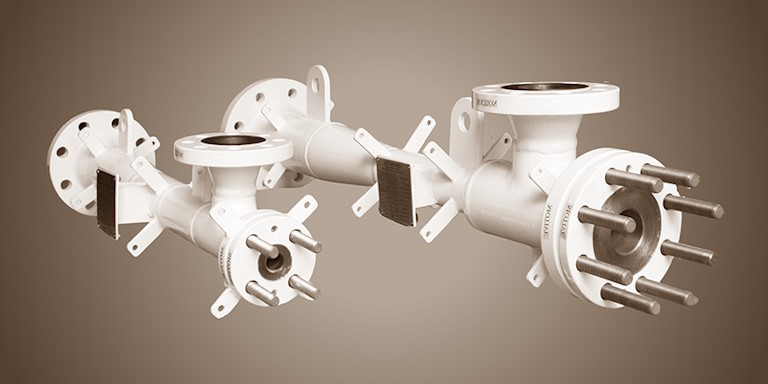
Why is it important to capture lightning?
-
Reducing environmental pollution
-
Reducing emissions of carbon dioxide, methane and volatile organic compounds (VOCs).
-
Prevent acid rain caused by sulfur compounds.
-
-
Energy and resource recycling
-
Use flue gas as fuel for boilers, turbines or process plants.
-
Processing into petrochemical raw materials to produce high-value products.
-
-
Compliance with rules and regulations
-
International organizations such as the World Bank have developed plans to completely eliminate regular gas flaring by 2030 .
-
Failure to comply may result in significant fines and export restrictions.
-
-
Economic benefits
-
Reducing the costs associated with energy losses .
-
Creating new investment opportunities in the manufacturing industry.
-
How to collect combustion products
Depending on site conditions, gas composition, and the requirements of the industrial plant, various solutions for flare gas management and gas collection are available. The most important of these methods are:
1. Use a flare gas recovery unit (FGU).
In this process, a compressor extracts flue gas from the production line, compresses it and feeds it to a treatment plant or conveyor line.
-
Special feature :
-
The possibility of extracting gas directly and using it as fuel or food.
-
Makes combustion completely unnecessary under normal conditions.
-
-
Loss :
-
The initial investment costs are high.
-
Because it has moving parts, constant maintenance is required.
-
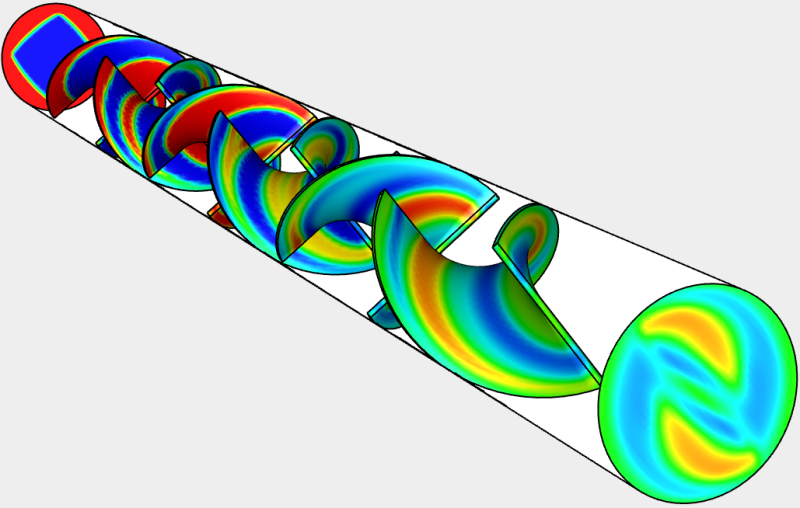
2. Use of liquid gas cannons
In this process, a pressurized working medium (e.g. water or process fluid) is passed through an injection nozzle and, due to the Venturi effect, sucks in the ignition gas and transfers it into the system.
-
Special feature :
-
No moving parts, easy maintenance and low costs.
-
Maintains stable performance even when flow rate changes .
-
Suitable for installations where water or auxiliary fluids may be used.
-
-
Loss :
-
There must be a source of engine fluid with sufficient pressure.
-
Compressor-related performance limitations.
-
3. Reinjection of gas into the reservoir or wellbore.
This method involves compressing flare gas and injecting it into oil and gas wells. In addition to extracting flare gas, this method also increases reservoir pressure and improves oil recovery (EOR).
-
Special feature :
-
Improving oil production efficiency.
-
Reducing environmental pollution.
-
-
Loss :
-
Pressure and injection systems are expensive.
-
Suitable geological conditions must be present.
-

4. They are used as raw materials for petrochemical plants.
A significant portion of the flue gases contains valuable compounds such as ethane and propane, which can be used as feedstocks for cracking plants or petrochemical products.
-
Special feature :
-
High added value.
-
Reducing dependence on foreign food sources.
-
-
Loss :
-
Requires prior cleaning and separation.
-
The costs of construction machinery are high.
-
5. Electricity generation (generation of electricity from flare gas)
A cost-effective solution is the use of flue gases to generate electricity. This can be done with a turbine or a gas engine.
-
Special feature :
-
Providing electricity to industrial plants or selling it to the grid.
-
Compared to direct combustion, greenhouse gas emissions are reduced.
-
-
Loss :
-
Fluctuations in gas composition can affect the performance of the device.
-
Contaminants must be filtered and separated.
-
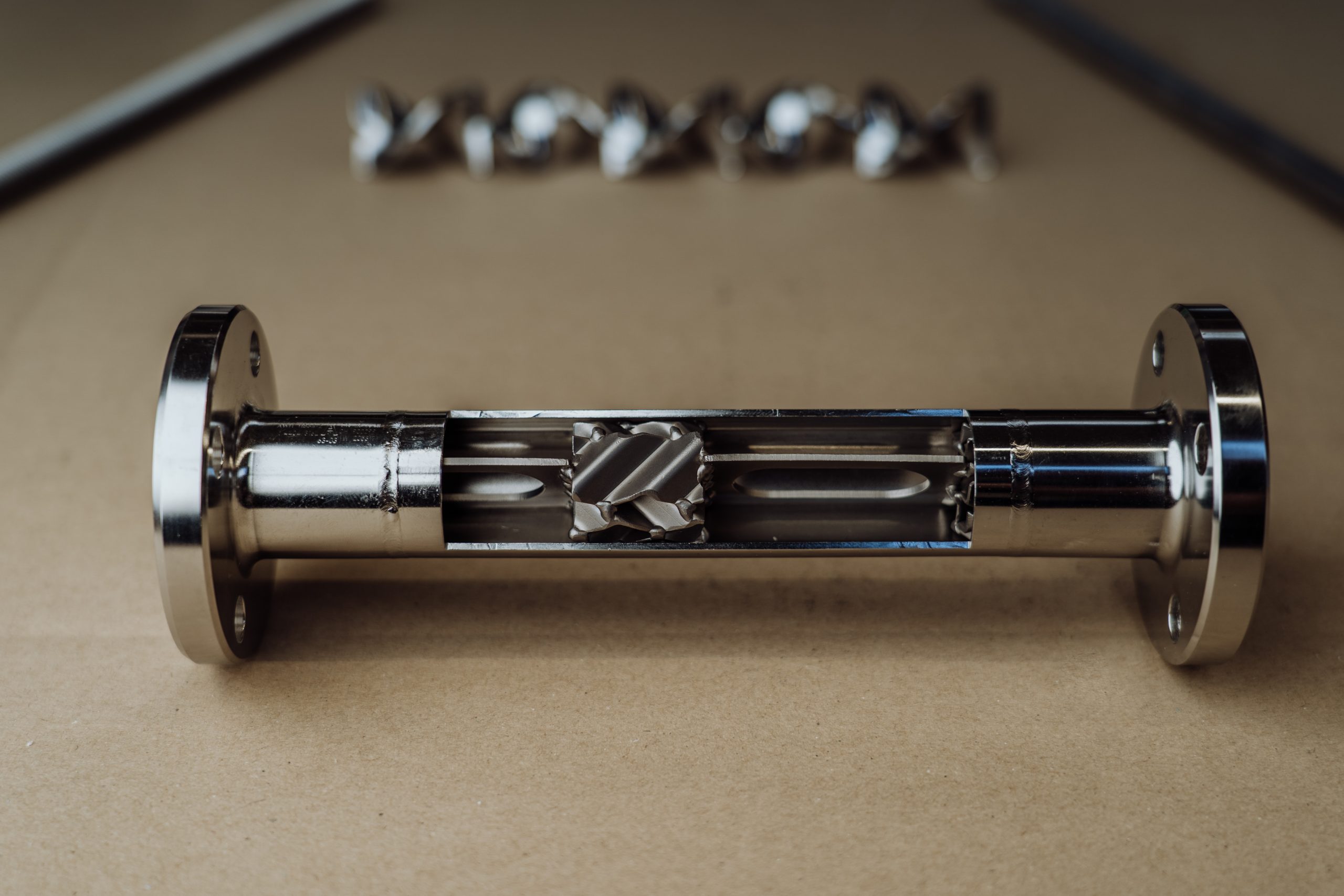
Stamixco GXM stationary mixing elements for mixing and dispersing viscous liquids
6. Gas-to-liquid (GTL)
Gas-to-liquid (GTL) technology converts combustion products into liquids such as diesel fuel or naphtha. This process is primarily used in large gas fields.
-
Special feature :
-
Produces high-quality fuel.
-
Increasing the economic value of flared associated gas .
-
-
Loss :
-
The technology is complex and the investment is very high .
-
Suitable for large projects.
-
Comparison of methods
| Street | Investment costs | difficult | Economic benefits | suitable |
|---|---|---|---|---|
| compressor | higher | many | higher | large divisions |
| thrower | fewer | A little | half | Small and medium-sized units |
| Injection into the tank | higher | half | higher | oil field |
| petrochemical raw materials | higher | many | very large | Petrochemical complex |
| Power generation | half | half | higher | industrial companies |
| Conversion of natural gas into liquid | very large | many | very large | Major projects |
Task of collecting flammable gases
-
Flue gas composition and flow fluctuations
-
Some technologies require high initial investment costs.
-
Technical and operational problems such as corrosion and contamination.
-
— Lack of infrastructure, especially in remote areas.
Future solutions
-
Development of flexible and cost-effective technologies such as modern bombers.
-
Use of combined energy sources ( e.g. use of flue gases to generate electricity and heat).
-
Striving to end routine waste incineration in accordance with international commitments.
Finally
Flare gas recovery is not only an environmental initiative but also a valuable opportunity for energy recovery and efficiency improvement in the oil and gas sector. Depending on the project, various methods can be used, including recovery in compressors, ejectors, and tank injection, as a feedstock for the petrochemical industry, power generation, and processing into liquid hydrocarbons.
The choice of the appropriate combustion process depends on factors such as flaring capacity, gas composition, investment costs, and the plant’s economic objectives. Ultimately, reducing or eliminating flaring is a fundamental step toward sustainable development and environmental protection.