Among the materials for fixed faucets, the first choice is PVC, which is easier to manufacture and has good durability.
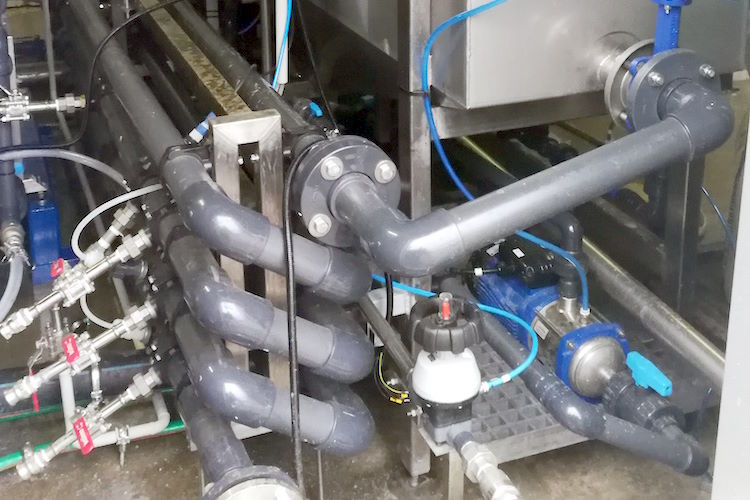
Polyvinyl chloride (PVC)
Polyvinyl chloride is a thermoplastic material consisting of PVC resin mixed in varying proportions with stabilizers, lubricants, fillers, pigments, softeners, and curing additives. Different combinations of these materials have been developed to provide a specific set of properties for different applications. However, the main part of each compound is PVC resin.
The technical term for PVC in organic chemistry is polyvinyl chloride: a polymer, i.e. a chain of vinyl chloride molecules. Brackets are not used in popular literature and are usually abbreviated to PVC. Where a specific type of PVC pipe is being discussed, that type will be clearly defined as follows. When the discussion is general, the term PVC pipe is used to refer to the range of PVC pressure pipe materials supplied by Windex.
Different types of polyvinyl chloride
The PVC with the highest short-term and long-term durability is PVC that does not contain plasticizers and contains a minimum amount of composite materials. This type of PVC is known as UPVC or PVC-U. Other resins or modifiers (such as ABS, CPE or acrylic) can be added to PVC to produce composites with improved impact resistance. These compounds are known as modified PVC (PVC-M).
Flexible or plasticized PVC with a wide range of properties can also be produced by adding plasticizers. Other types of PVC are called CPVC (Chlorinated PVC), which has a higher percentage of chlorine, and Oriented PVC (Oriented PVC), which is PVC-U with molecules preferentially oriented in a particular direction.
PVC-U (non-plastic) is strong and durable, has a maximum tensile stress of about 52 MPa at 20°C and is resistant to most chemicals. In general, PVC-U can be used at temperatures up to 60°C, although the actual temperature limit depends on pressure and environmental conditions.
PVC-M (modified) is durable and has increased impact strength, especially under impact. The modulus of elasticity, yield strength and tensile strength are usually lower than those of PVC-U. These characteristics depend on the type and amount of modifier used.
PVC (plasticizer) is less rigid. Has high impact strength. Easier to extrude or mold. Has low heat resistance. It is less resistant to chemicals and generally has a lower tensile strength. There is more joint-to-joint variation in PVC than in PVC-U. Vinidex does not manufacture PVC plastic pressure tubing.
PVC-S (chlorinated) is similar to PVC-U in most properties, but has higher heat resistance and can operate at temperatures up to 95°C. It has a similar ultimate stress at 20°C and an ultimate tensile stress of about 15 MPa at 80°C.
PVC-O (Oriented PVC) is sometimes referred to as HSPVC (High Strength PVC). PVC-O pipes are a major advancement in plastic pipe technology.
PVC-O PVC-O PVC-O PVC طويلة السلسلة في اتجاه محيطي أو دائري. ويوفر زيادة كبيرة في الخصائص في هذا الاتجاه. ومن بين المزايا الأخرى، يمكن تحقيق قوة شد نهائية تصل إلى ضعف قوة PVC-U بالنسبة لـ PVC-O. في تطبيقات مثل أنابيب الضغط، حيث يوجد اتجاه محدد جيدًا للضغط، يمكن تحقيق مكاسب كبيرة جدًا في القوة و/أو توفير المواد.
PVC-O في اتجاه الحلقة هي:
- قوة الشد PVC-O – 90 ميجا باسكال
- المعامل المرن لـ PVC-O – 4000
All rights reserved. That’s it. All rights reserved. All rights reserved. ذلك.
الجزيئي علأنابيب البلاستيكية All rights reserved. الواقع تم 1974 100 100 100 يوركشاير في إنجلترا. Vinidex Vinidex PVC-O 1982 PVC-O 1986. 1986. Vinidex In stock PVC-O in stock. اسم سوبرمان
Comparison of standard PVC-O, PVC-M and PVC-U.
The composition of PVC-O is identical to that of PVC-U, and their general characteristics are also similar. The main difference in mechanical properties is in the direction of traction. The composition of PVC-M varies depending on the addition of an impact modifier and differs from standard PVC-U depending on the type and amount of modifier used. The following comparison is general in nature and is intended to highlight typical differences between pipe materials.
Tensile strength . Tensile strength of PVC-O is almost twice as high as that of regular PVC-U. Tensile strength of PVC-M is slightly lower than that of standard PVC-U.
Durability . Both PVC-O and PVC-M maintain flexibility under all practical conditions. Under some adverse conditions, standard PVC-U may exhibit brittle properties if cut or damaged.
Safety factors . Designing plastic piping for pressure service involves predicting long-term properties and applying a safety factor. As in all engineering projects, the size of the safety factor indicates the level of confidence in the performance prediction. The greater confidence in the expected behavior of the new generation PVC-M and PVC-O materials has the advantage of allowing a lower safety factor to be used in the design.
Design stress . PVC-O and PVC-M pipes operate at a higher design stress than standard PVC-U pipes, which results in a lower safety factor and, in the case of PVC-O, in higher strength in the circumferential direction.
Flexibility and creep . The elastic modulus of PVC-O is 24% higher than that of standard PVC-U in one direction, and the same elastic modulus as standard PVC-U in other directions. The elastic modulus of PVC-M is slightly lower than that of standard PVC-U.
Impact properties – PVC-O is at least 2-5 times higher than standard PVC-U. PVC-M also has higher impact resistance than standard PVC-U. Impact tests of PVC-M pipes are aimed at obtaining plastic fracture characteristics.
All rights reserved .
PVC -U PVC-M PVC-U PVC-U PVC-U PVC-U PVC-U PVC-U PVC-U لاصقة مذيبة. PVC-O is used. لا يمكن ربط PVC-O بالأسمنت باستخدام المذيبات.
PVC
PVC PVC PVC PVC PVC PVC PVC الجدول أدناه. All rights reserved. Product description K67 PVC. يتم عرض بعض القيم المقارنة لمواد الأنابيب الأخرى All rights reserved. This is the case.
All rights reserved. All the same. الأنابيب في قسم التصميم في هذا الدليل. Worldwide All the same.
الاختصارات
- PE: البولي ايثيلين
- PP: مادة البولي بروبيلين
- PA: مادة البولي أميد (نايلون)
- English: To the contrary
- أ: الأسمنت الأسبستوس
- GRP: أنبوب زجاجي مقوى
In the past
- 1MPa = 10bar = 9.81 كجم/سم 2 = 145 رطل في 2
- 1 = 4.186 = 0.948 × 10 -3 = 0.737 = 0.737 =
- 1 كلفن = 1 درجة مئوية الحرارة الحرارة
الخصائص الميكانيكية
For PVC, as for other thermoplastics, the stress/strain response is time and temperature dependent. When a constant, steady load is applied to a plastic material, the resulting deformation behavior is very complex. There is an immediate elastic response that is completely restored when the load is removed. In addition, there is a slower deformation that continues indefinitely while the load is applied until rupture occurs.
This is known as creep. If the load is removed before failure, the original dimensions will gradually return over time. The rate of creep and recovery is also affected by temperature. At higher temperatures, the rate of creep tends to increase. Because of this type of response, plastics are called viscoelastic materials.
Voltage regression line
The result of creep is that pipes subjected to higher pressures fail in a shorter period of time than pipes subjected to lower pressures. For pressure pipes, a long service life is a key requirement. It is therefore important that pipes are designed to operate at wall pressures that provide a longer service life.
To determine the long-term properties, a large number of tube specimens are tested to failure. All of these individual data points are then plotted and regression analysed. The linear regression analysis is extrapolated to yield an expected ultimate failure stress of 97.5% at the design point, which must exceed the minimum required stress (MRS).
A safety factor is then applied to the MRS to obtain the maximum working pressure for the piping material used in sizing the piping for the pressure rating range.
In Europe and Australia, the ISO design point of 50 years or 438,000 hours is used. In North America, the design point of 100,000 hours has been used throughout history. This design point is entirely arbitrary and should not be interpreted as an indication of the expected service life of PVC pipe.
The stress regression line is usually plotted on logarithmic axes, showing the circumferential or hoop stress versus failure time.
*For PVC-M and PVC-O, the 50-year specification point represents a lower confidence point of 97.5%, ensuring that the minimum safety factor is achieved.
Creep coefficient
Products سياق معدل التحميل أو المدة ودرجة الحرارة.
الطريقة العالمية لعرض البيانات هي منحنى الضغط مقابل الزمن عند الضغط المستمر. All rights reserved. Well, that’s all. All rights reserved إليه عادةً باسم معامل الزحف.
هذه المنحنيات مفيدة، على سبيل المثال، في تصميم الأحمال العرضية قصيرة المدى وطويلة المدى للأنابيب.
All rights reserved. PVC-O PVC-U PVC-U PVC-U PVC-U 24% للظروف المكافئة في اتجاه الاتجاه. In the future.
درجات حرارة عالية
تصنيف الضغط في درجات حرارة عالية
All rights reserved. PVC 20 years. All rights reserved. All the same.
يعود
→ نتيجة “ذاكرة المادة.” “تتذكر” المنتجات البلاستيكية شكلها الأصلي، وإذا تشوهت لاحقًا، فإنها تعود إلى شكلها الأصلي تحت الحرارة.
Worldwide 60 درجة مئوية وفي الأنابيب PVC-O أقل من 50 درجة مئوية.
Weathering and solar degradation
The effect of “weathering” or surface degradation by radiant energy on elements on plastics is well studied and documented. Sunlight causes changes in the molecular structure of polymeric materials, including PVC.
Dampers and reflectors are usually built into the material, limiting the process to a surface effect. Gloss loss and discolouration will be observed in extreme weather conditions. The processes require energy and cannot be continued if the material is protected, for example by underground pipes. In practice, this does not affect the bulk material and the properties in preliminary tests, i.e. tensile strength and elastic modulus, are not affected.
However, microscopic disturbances on the weathered surface can cause failure under extreme local stress conditions, such as when the outer surface is impacted. Thus, the impact strength tested is reduced.
Sun protection
All Vindex PVC pipes have protection systems that guarantee protection against harmful effects during normal maintenance and installation. If maintenance intervals exceed one year, or if impact resistance is important for a particular installation, additional protection may be recommended.
This can be achieved by storing the pipes under cover or covering the pipes with suitable materials such as burlap. Heat accumulation should be avoided and ventilation should be provided. Black plastic sheets should not be used. Above-ground pressure pipe systems can be protected with a coat of white or pastel PVA paint. Good adhesion is achieved by simply washing with a detergent to remove grease and dirt.
Aging of materials
The tensile strength of PVC does not change significantly with age. The short-term tensile strength usually increases slightly. It is important to understand that the stress regression line does not reflect the weakening of the material over time. For example, a pipe that has been under constant stress for years will still exhibit the same short-term ultimate burst pressure as a new pipe.
However, this material changes shape over time, so that the “free volume” in the matrix decreases and the number of cross-links between molecules increases. This leads to some changes in mechanical properties:
- Slight increase in tensile strength
- Significant increase in yield strength
- Increased modulus of elasticity at high pressure levels
Overall, these changes appear beneficial. However, the response of the material changes at high stress levels due to inhibition of local formation of stress concentrators and reduction in the fatigue susceptibility of the paper. Brittle fracture and a general reduction in impact strength are likely to occur.
These changes occur rapidly over time, rapidly immediately after formation and more slowly over time. While the paper is in use, it is difficult to measure except in the long term. Artificial aging can be achieved by heat treatment at 60°C for 18 hours. PVC-O undergoes this aging during the milling process and its properties are very similar to those of older materials, but with a significantly increased tensile strength.
Corrosion resistance
Plastics generally perform well in aggressive conditions. The main features that contribute to this are a low modulus of elasticity and a low coefficient of friction. This allows the material to “give” and the molecules tend to slide rather than abrade the surface.
Well-known low friction materials such as Teflon, nylon and polyurethane have excellent properties. However, cost effectiveness is a key factor and PVC shows excellent performance in terms of wear rate and unit cost. The factors affecting corrosion are complex and it is difficult to relate test data to practical conditions.
All rights reserved. Worldwide التآكل للعديد من منتجات الأنابيب. All rights reserved. PVC PVC PVC على النتائج التالية:
| الخرسانة (بدون خط) |
تآكل قابل للقياس عند 150.000 |
| الطين الزجاجي (الطين المزجج) |
الحد الأدنى من التآكل عند 260.000 RUR Price: 260,000 rubles. |
| بولي كلوريد الفينيل | الحد الأدنى من التآكل عند 260.000 دورة 260,000 rubles ) |
التأثيرات الميكروبيولوجية
PVC is impervious to the microbiological organisms commonly found in groundwater and sewer systems.
Microbiological attack
PVC is not a food source and is highly resistant to termite and rodent damage.
Effect of soil sulfides
Grey discoloration of underground PVC pipes can be observed in the presence of sulphides, commonly found in soils containing organic matter. This is due to interaction with the stabilization systems used in the treatment. This is a surface effect and does not impair performance in any way.