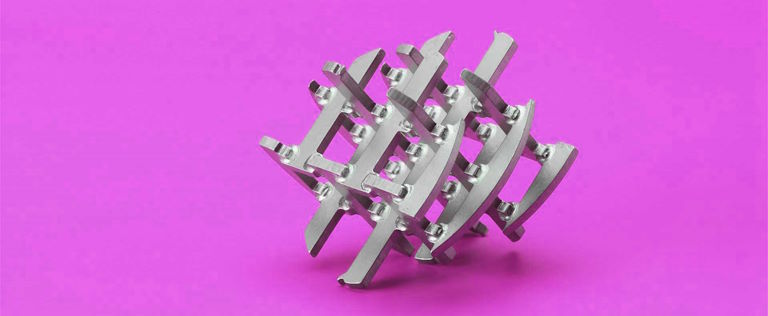
The static characteristics of crossed element mixers are:
- Highest mixing power among static mixers
- Suitable for fluids with low to very high viscosities
- Shortest mixer length compared to other mixers
- Ability to mix fluids with viscosity differences of approximately 1 million times
- Mixing fluids with a volume difference of 100,000 times
- Suitable for very hot polymer mixtures
- Capable of producing up to 24 inches in size


Cross-element static mixers are a vital tool in various industries, designed to increase efficiency and uniformity in mixing processes. These mixers are widely used in a variety of industrial processes such as chemical, petrochemical, pharmaceutical and food industries. In this article, we will review the performance, benefits, applications and key points about cross-element static mixers.
Static performance of the cross-element mixer
Static Cross Element Mixers operate on the principle of fluid flow reversal. These mixers have internal elements that are arranged crosswise in the flow path and change the direction of the flow, resulting in uniform mixing of the fluids. Each element divides the flow into two parts and changes its direction, resulting in better mixing of the materials. This process is repeated throughout the mixer, ultimately resulting in high uniformity in the final mixture.
Advantages of using a static cross-element mixer
1. High uniformity
One of the most important static advantages of cross-element mixers is the high uniformity of the mixtures produced. Due to the special structure of the internal elements, these mixers have the ability to create homogeneous and uniform mixtures, which is of great importance in many industrial processes.
2. Reduce energy consumption
Static mixers require no moving parts and use less energy to perform the mixing process. This feature reduces energy consumption and associated operating costs.
3. Low cost maintenance
The absence of moving parts in static cross-element mixers reduces the need for periodic maintenance and repairs. This reduces maintenance costs and increases productivity.
4. Easy installation and setup
Static mixers are easy to install and operate. The simple structure and lack of need for complex peripheral equipment make the installation process quick and easy.
5. Corrosion and wear resistance
Static cross-element mixers are typically made of corrosion and wear-resistant materials that are highly resistant to harsh environmental conditions and various chemicals. These features increase the life and efficiency of these mixers.
Static applications of crossed element mixers
1. Chemical industry
Static cross-element mixers are used in the chemical industry to mix raw materials, reactants, and produce finished products. These mixers improve the quality of chemical products by creating high uniformity in mixtures.
2. Petrochemical industries
In the petrochemical industry, static cross-element mixers are used to mix petroleum products, gases, and chemicals. These mixers increase the efficiency of production processes by creating uniformity in the products.
3. Pharmaceutical industries
In the pharmaceutical industry, the use of static cross-element mixers is very common for the production of drugs and pharmaceutical compounds. These mixers ensure the quality and efficacy of drugs by creating uniformity in drug mixtures.
4. Food industry
Static cross-element mixers are used in the food industry to mix raw materials and produce finished products such as sauces, syrups, and dairy products. These mixers improve the quality and taste of food products by creating uniformity.
Key points about static cross-element mixers
1. Choosing the right materials
Choosing the right materials for the internal static mixer elements is of utmost importance. The materials must have sufficient resistance to corrosion and wear and be compatible with the process environment.
2. Precise design
Accurate static design of the cross-element mixer based on specific process requirements and fluid properties is very important. The use of simulation and modeling software can help improve the design and performance of the mixer.
3. Periodic maintenance and inspection
Although static mixers require less maintenance than mobile mixers, performing periodic inspections and regular maintenance can increase their useful life and efficiency.
4. Adaptation to environmental conditions
The static cross-element mixer must be compatible with the environmental and process conditions. Proper material selection and design can prevent problems and failures caused by environmental conditions.
5. Use filters
To prevent impurities from entering the static mixer, it is recommended to use appropriate filters in the fluid inlet path. This can prevent potential problems and failures.
Conclusion
Static Cross Element Mixers are recognized as a vital tool in various industries by providing high uniformity and efficiency in mixing processes. The use of these mixers can help improve product quality, reduce energy consumption and maintenance costs, and increase productivity. By observing key points and selecting appropriate materials and design, the efficiency and useful life of these mixers can be optimally utilized.