Stationary mixers are indispensable in many industries, such as chemical, food, oil and gas, and water treatment, because they mix fluids without moving parts. These devices use plates, paddles, or stationary elements within a tube to create controlled turbulence in the fluid, ensuring consistent mixing. Given the critical role these devices play in the quality of the final product, quality control
is of utmost importance in the design, production, and operation of stationary mixers and should not be neglected.
The importance of quality control in stationary mixers
The quality control of stationary mixers aims to achieve several main objectives:
-
Make sure the device functions properly under the specified operating conditions.
-
Extends the life of equipment and reduces the need for premature repairs or replacement.
-
Ensuring the homogeneity of the mixture affects the quality of the final product.
-
Reduce energy consumption and operating costs through careful planning and construction.
Without proper quality control, there is a risk of reduced efficiency, flow blockages, premature wear, and even contamination of the final product.

Main criteria for quality control of stationary mixers
1. Quality of raw materials
-
Valve body and filter element materials : These are typically made of stainless steel, carbon steel with a corrosion-resistant coating, or durable engineering plastic. Choosing the wrong material can lead to corrosion, wear, or failure.
-
Chemical resistance : Must be compatible with the properties of the fluid used.
-
Mechanical strength : Compressive strength and operating temperature are important requirements.
2. Accuracy of the mixing elements
-
The dimensions and angles of the parts must correspond to the design drawings.
-
In order for the component to conduct electricity properly, its surface must be free of defects, cracks or uncontrolled sharp edges.
-
Tolerances must be maintained according to industrial manufacturing standards.
3. Quality control of welding and assembly work
-
For stainless steel, use standard welding processes such as TIG or MIG.
-
Non-destructive testing (NDT) methods such as X-ray or liquid penetration testing are used to detect cracks or welds.
-
Make sure the components and pipes are perfectly aligned to avoid unnecessary pressure drop.
4. Functional tests
-
Hydrostatic pressure test : Checks the equipment’s resistance to operating pressure and ensures that there are no leaks.
-
Flow test : Checking the homogeneity of the mixture and measuring the pressure drop under real or simulated conditions.
-
Predicting flow behavior before mass production using CFD (Computational Fluid Dynamics) analysis.
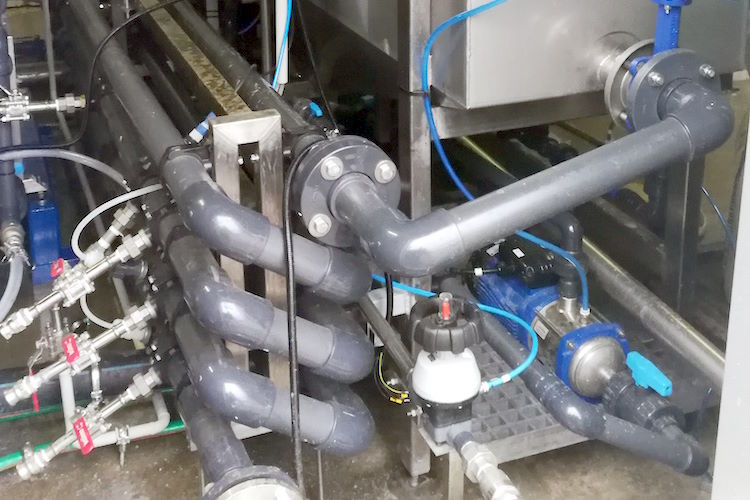
Reference standards and guidelines
To ensure the quality of mixer production and the uniformity of testing , compliance with international standards is required. The most important of these are:
-
ASME B31.3 : Requirements for the design and construction of process piping.
-
ISO 9001 : Comprehensive quality management system.
-
ASTM A240/A276 : Specification for stainless steel materials.
Step-by-step quality control process
-
Initial testing of materials
-
Verification of the material identification certificate (factory test certificate)
-
Chemical and mechanical testing of samples
-
-
Control during the construction phase
-
Dimensional control with precision instruments
-
Controlling the angle and position of elements
-
Intermediate welding test
-
-
Final exam
-
Stress tests
-
Hydraulic performance and mixing tests
-
Documentation of the results in a quality report
-
-
Pre-shipment inspection
-
Inspection of corrosion protection coatings
-
Check your package and prepare it for shipping.
-
Problems of quality control of stationary mixers
-
Special process conditions : Some industries, such as petrochemicals or pharmaceuticals, require very high mixing accuracy, which complicates the testing process.
-
Use modern test equipment : Some tests , such as computational fluid dynamics tests or real fluid mixing tests, are very expensive.
-
High degree of customization : Since many kitchen appliances are custom-made, it is difficult to create standardized test protocols.
Solutions to improve quality control
-
Implement a multi-level control system involving designers and quality control engineers .
-
Use modern technologies like 3D scanning to select the right size.
-
Continuous training of production and quality control teams to ensure they meet the latest standards.
-
Complete documentation from design to delivery to track potential issues.
Finally
Stationary mixers occupy a prominent position in numerous industries due to their simple design and high efficiency . However, these advantages can only be fully realized through strict quality controls at every stage of production and operation. From raw material selection and testing to compliance with international standards, every step is important to ensure the longevity and optimal performance of the equipment. Investments in quality control not only prevent operational problems and additional costs, but also protect the manufacturer’s reputation and increase customer satisfaction.