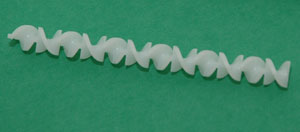
This type of mixer is easy to manufacture and is usually used in models with 6 or 8 elements.
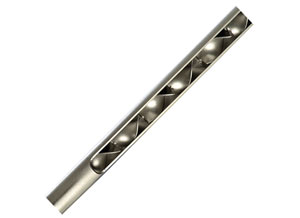
Stationary solar motors (planetary motors) are usually made of stainless steel.
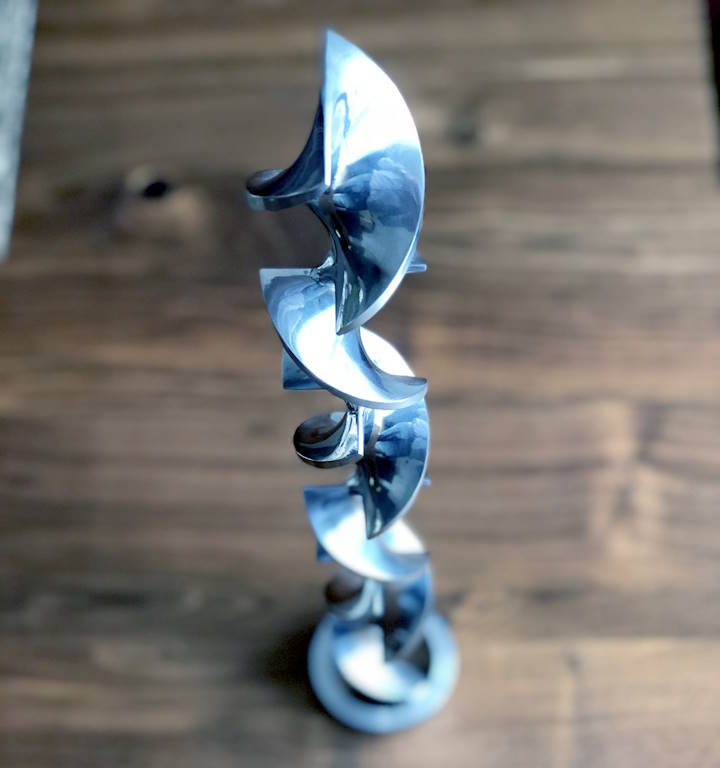
He represents
Mixing is a critical process in various industries, including oil and gas, petrochemicals, food, pharmaceuticals, and even construction materials. The quality of the final product, the consistency of the material composition, and the efficiency of the production line depend significantly on the type and quality of the mixing equipment. Stationary planetary mixers occupy a special position in this regard as some of the most efficient modern equipment.
The design of this unique motor is based on the principles of hydrodynamics and enables efficient mixing of materials without moving parts or additional mechanical energy. We examine the complete architecture of this technology, its advantages, applications, and popularity.
What is a food processor?
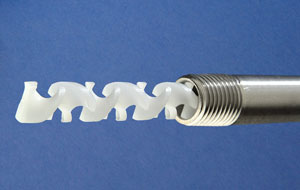
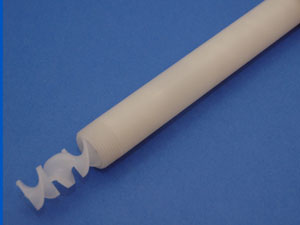
A static mixer is a cylindrical device with built-in fixed elements or special plates. As two or more fluids flow through a tube, they collide with these elements, causing them to be deflected, separated, and rotated. This process is repeated several times during the mixing process, creating a homogeneous mixture.
Unlike dynamic motors, which require motors, rotor blades, and other moving parts, static motors have no moving parts and operate solely on the power of the fluid flow. This reduces maintenance costs, extends service life, and simplifies operation.
What is a solar-stationary (planetary) hybrid?
A special type of stationary mixer is the so-called planetary stationary mixer . It received this name because the nature of the material flow in it resembles the orbital motion of a planet around the sun.
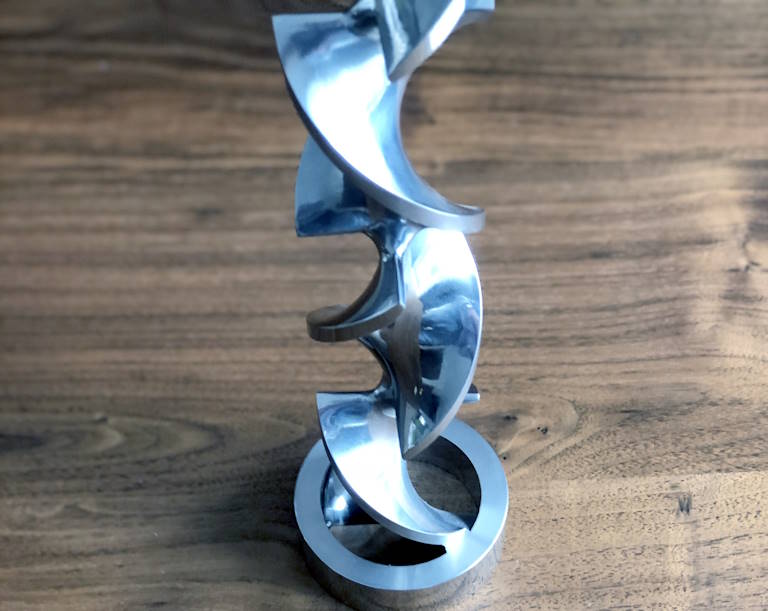
In this model, the internal components are designed so that the fluid undergoes a spiral and orbital motion as it flows. This motion increases the contact area between the components and creates an extremely homogeneous and finely dispersed mixture.
In short: In a solar mixer, the material moves not only longitudinally (flow axis), but also circumferentially and transversely. This enables precise mixing even of liquids with different viscosities, high concentrations, or multiphase flows.
Design and performance features
The stationary solar mixer has the following features:
-
Special elements : Spiral and orbital element design ensures continuous flow distribution.
-
No external power source required – works exclusively with fluid pressure.
-
Flow path uniformity : Three-dimensional, nonlinear flow patterns result in a uniform distribution.
-
Suitable for all types of liquids : from light gases to high viscosity liquids.
-
Easy to install : Usually installed into existing pipes or ducts and does not require additional space.
-
Custom designs : Length, diameter and number of elements can be changed according to project requirements.
Advantages of using static solar mixers
-
Reduced energy costs : by eliminating motors and mechanical components.
-
Easy maintenance : The blade does not require lubrication or repair.
-
A homogeneous mixture improves the quality of the final product.
-
Robustness and durability : because there are no wearing parts.
-
Can be used in harsh conditions : suitable for high pressure and high temperatures.
-
Environmental protection : reducing energy consumption and environmental pollution.
-
Industrial-scale performance : the ability to mix large volumes of liquid efficiently.
Applications of static solar vibrators
This type of mixer is commonly used in the following industries:
-
Oil and gas industry : Chemical mixture of hydrocarbons , corrosion inhibitors and enhancers.
-
Petrochemicals : Production of polymers, resins and specialty chemicals.
-
Water and wastewater : introduction of disinfectants or neutralizing chemicals.
-
Food industry : standardization of flavors, colors and additives in liquids.
-
Pharmaceuticals : Precise mixing of active ingredients and solvents to produce liquid medicinal products.
-
Construction : Mixing additives into concrete and mortar.
-
Production of renewable energies : for example, biogas mixtures or liquid biofuels.
Resolved differences between solar vibrators and other vibrators
-
Compared to dynamic engines : no engine required, less maintenance.
-
Compared to conventional stationary linear mixers: higher efficiency, three-dimensional mixing.
-
Compared to mechanical tank machines : requires less space and is processed faster.
Problems and limitations
While stationary solar faucets offer many advantages, they can also have some limitations:
-
Increased pressure drop : due to components in the flow path.
-
The mixing intensity cannot be adjusted online : unlike a dynamic mixer, it can be controlled by changing the motor speed.
-
Accurate construction required : If the construction is not up to standard, the quality of the mix may decrease.
New trends and the future of stationary solar mixers
Given the growing demand for economical, sustainable, and efficient equipment in the industrial sector, the use of these mixers is expected to increase in the coming years. Innovative trends include:
-
-
Use modern anti-corrosion materials to extend the service life.
-
Use computational dynamics software to optimize designs for maximum efficiency.
-
Integration of intelligent systems for monitoring mixture consumption and mixture quality.
-
Application in new energy sources such as hydrogen energy and biofuels.
-
Finally
Stationary planetary mixers, a new technology in the industrial equipment sector, represent an efficient solution for mixing liquids thanks to their unique design and performance. These mixers require no mechanical energy, reduce maintenance costs, and offer higher mixing quality, making them an ideal alternative to conventional mixers.
Due to the growth of the industrial sector and the demand for environmentally friendly operations, stationary solar mixers are expected to occupy a larger share of the mixing equipment market in the future.