Homogenization is a critical process in the food, pharmaceutical, chemical, and cosmetic industries, serving to homogenize particles and form stable emulsions . Among the many homogenization processes, stationary mixers occupy a special position due to their simple design, high efficiency, and low operating costs . This article discusses the principles of homogenization, its advantages and disadvantages, and its applications .
 What is a food processor and how does it work?
A stationary mixer is a device with no moving parts that is fixed in a fluid stream. It consists of fixed elements (usually plates or screws) and ensures uniform mixing by repeatedly spraying, rotating, and mixing the fluid .
Homogenization mechanism in stationary mixers
-
Flow dividers : Internal components that divide the fluid flow into several sections.
-
Rotation : A change in the flow direction leads to a stronger collision of the particles.
-
Recombination : The separated streams are recombined to form a homogeneous mixture.
This process results in a reduction in particle size, the formation of a stable emulsion and a uniform distribution of the material .
 Advantages of homogenization with a stationary mixer
 No moving parts → Low maintenance costs
Highly efficient mixing → Produces fine, uniform particles
Flexible flow rates → Can be used in continuous production lines Low energy consumption compared to mechanical homogenizers Easy to install in existing piping Can be used for viscous and shear-sensitive liquids
Disadvantages and limitations
 Higher pressure drop than conventional pipes.
Limited to fluids with large solid particles (which can clog the system).
Requires careful design for each fluid.
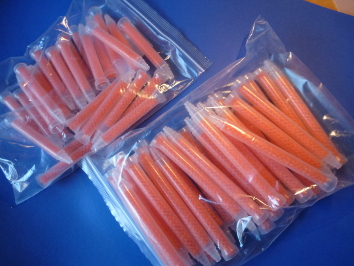 Application of a stationary mixer for homogenization
1. Food industry
-
Production of homogenized milk, sauces, beverages and edible oils.
-
Creates stable emulsions such as mayonnaise and salad dressings.
2. Pharmaceutical and cosmetic industry
-
Production of medicinal creams, lotions and emulsions.
-
Homogenization of injection suspensions
3. Chemical and petrochemical industry
-
A mixture of polymers, resins and chemicals.
-
Production of homogeneous adhesives and coatings
4. Biotechnology industry
-
Homogenization of biological solutions and microbial cultures
Compared to other homogenization methods
| Homogeneity method | To use | Shortage |
|---|---|---|
| Stand mixer | Low costs and easy maintenance | Restrictions for viscous liquids |
| High-pressure homogenizer | More powerful particle reduction | High energy and maintenance costs |
| Ultrasonic | Suitable for sensitive liquids. | The limits of the industrial sphere |
| mechanical engine | High-energy hybrid | High energy consumption |
Finally
Static mixers have revolutionized industrial homogenization processes and offer a cost-effective solution. These systems are particularly popular in the food and pharmaceutical industries because they eliminate moving parts, reduce costs, and improve the quality of the final product. Selecting the right static mixer based on fluid viscosity, flow rate, and particle size is critical to the success of this process.
Frequently Asked Questions
Can a static mixer be used instead of a high-pressure homogenizer?
In some cases, when dealing with medium-viscosity materials, yes, but for very fine particles (less than one micron), high pressure may be required.
2. What materials are stand mixers typically made of?
Depending on the type of liquid, they can be made of stainless steel (316L), polypropylene, and Teflon.
3. How can we prevent engines from becoming clogged by static electricity?
Use a pre-filter and develop a filter suitable for particles.
4. Can a stationary mixer be used with gases?
Yes, but its design must match the density and flow rate of the gas.
Thanks to their elegant design and high performance, stationary mixers have become one of the most common methods in the processing industry. Improvements in the design of the mixing elements are expected to further increase the efficiency of these systems in the future.